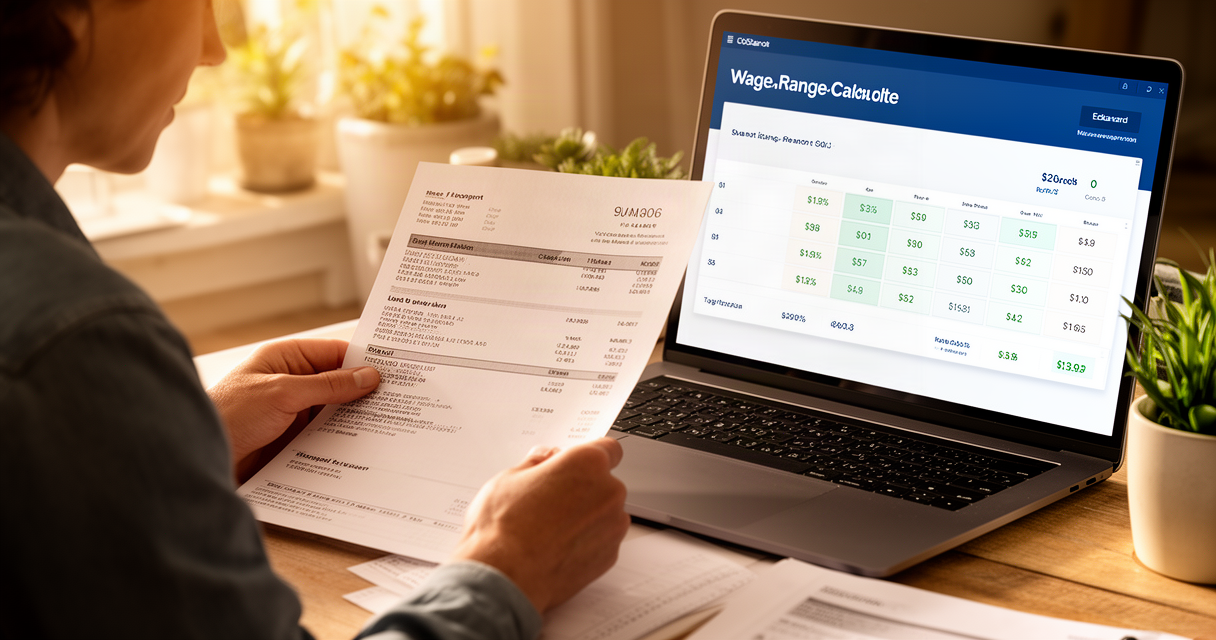
Three calculators. Three different monthly payments. Same borrower, same income, same loan balance.
That’s the situation a growing number of federal student loan borrowers are running into as they try to estimate their payment under the Repayment Assistance Plan (RAP), the new income-driven plan that replaced SAVE. One borrower described in a r/StudentLoans thread got a Student Loan Planner estimate of about $319 a month and a College Investor estimate of about $220 a month for what was supposed to be the same set of inputs — a nearly $100 gap on a single number that determines a household budget line.
The stakes here are not abstract. More than 7 million borrowers, per the Department of Education, are being moved off SAVE and into a new payment structure on a compressed, staggered deadline running through the back half of 2026. Getting the number wrong — trusting an estimate that turns out $100 or $500 off from reality — means either overpaying every month or getting blindsided when the real bill lands.
The quick answer: the official studentaid.gov calculator is the one that actually talks to servicer and IRS data, so it should be the anchor. But it has had documented errors in 2026, and the third-party calculators from Student Loan Planner and The College Investor are useful cross-checks, not replacements. Rely on any single tool’s output and there’s a real chance of a wrong number. Cross-check two or three, and the gap between them tells its own story about where the risk sits.
What Changed: From SAVE to RAP
The SAVE plan is dead. A federal court order vacated it in roughly March 2026, and the Department of Education followed with a press release explicitly labeling it the “unlawful SAVE Plan” and directing borrowers off it — confirm the exact court date and current ED guidance at studentaid.gov, since litigation timelines get summarized differently across outlets.
In its place: the Repayment Assistance Plan, created by the 2025 reconciliation law. The bill is officially the One Big Beautiful Bill Act, though ED’s own materials refer to the underlying student loan provisions as the Working Families Tax Cuts Act — both names describe the same statutory change, and it’s worth knowing both because different agencies and articles use different labels.
The rollout is not happening all at once. Servicers are sending notices to affected borrowers on a staggered schedule that started July 1, 2026, and runs through December 2026, as reported. Each borrower gets 90 days from the date on their own notice — not a single fixed deadline for everyone — to either pick a plan or get auto-enrolled into Standard or Tiered Standard repayment. Confirm the specific notice date and deadline directly with the loan servicer or at studentaid.gov, because the schedule differs person to person.
How RAP Actually Calculates a Payment
RAP’s payment formula, as described by the Congressional Research Service (CRS Report IF13075), is a tiered percentage of the borrower’s full adjusted gross income (AGI) — not discretionary income, which is how older IDR plans worked. The rate starts at 1% of AGI and increases by roughly one percentage point per $10,000 income bracket, capping at 10% for AGI above roughly $100,000. The exact bracket cutoffs are rounded slightly differently across sources reporting on the formula, so confirm the precise bracket edges at studentaid.gov rather than treating any single article’s numbers as exact.
From that base payment, the formula subtracts $50 per month for each dependent the borrower claims on their own tax return — not the household’s combined dependents, and not a spouse’s return, which matters for the divergence discussed below. There’s a $10 monthly minimum payment regardless of how many dependents reduce the number toward zero.
Two features soften the arithmetic further. Unpaid interest is waived, not capitalized, meaning it doesn’t get added to principal and start compounding. And borrowers get at least a $50 monthly principal subsidy applied by the servicer. Forgiveness for the remaining balance kicks in after 360 qualifying payments — 30 years.
RAP payments are calculated from AGI, not household income, which makes the accuracy of the AGI figure a calculator plugs in as important as the formula itself. A calculator using a self-reported, rough income estimate is working from a shakier foundation than one pulling verified AGI from IRS data.
To see the mechanics without pretending to know an exact output: picture a hypothetical single filer with roughly $60,000 in AGI, one dependent claimed on their own return, and about $45,000 in federal loan balance. This is illustrative only, not a real quote from any calculator. Their base tier lands somewhere in the middle brackets of the 1%-10% scale based on that income level, then the formula deducts $50 for the one dependent, then the $10 floor applies if that subtraction pushes the number low enough. The point isn’t the final dollar figure — it’s that income tier, dependent count, and the floor all interact, and small differences in how a tool handles any one of those three inputs can move the final number meaningfully.
The Three Calculators, Compared
| Tool | Who Makes It | Inputs It Takes | Pulls Live Loan/Tax Data? | Best For | Caveat |
|---|---|---|---|---|---|
| studentaid.gov Repayment Calculator | U.S. Department of Education | Loan balance, income, family size, filing status | Yes, when logged into a federal account — pulls servicer loan data and can reference IRS-linked income info | The authoritative baseline number | Reportedly renamed from “Loan Simulator” to “Repayment Calculator” around mid-2026 — confirm the current tool name at studentaid.gov. Has had documented calculation errors in 2026 (see below). |
| Student Loan Planner RAP Calculator | Student Loan Planner (private financial advisory firm) | Self-reported income, dependents, filing status, loan balance | No — self-reported inputs only | Borrowers who want a second opinion or plan-comparison context alongside RAP-specific advice | Independent estimate; doesn’t see the borrower’s actual servicer file, so it can’t catch servicer-side data errors |
| The College Investor RAP Calculator | The College Investor (personal finance media site) | Self-reported income, dependents, filing status, loan balance | No — self-reported inputs only | Quick, free ballpark estimate without an account login | Handles dependent-count and filing-status inputs differently enough from Student Loan Planner’s tool that outputs have diverged in reported cases |
The Official studentaid.gov Tool
This is the tool that should carry the most weight, because it’s the only one of the three with a direct line to actual servicer loan records and, when logged in, IRS-linked income data rather than a number the borrower types in from memory. As reported, the tool was reportedly renamed sometime around mid-2026 from “Loan Simulator” to “Repayment Calculator” — confirm the current name and URL at studentaid.gov before assuming an old bookmark still points to the right page.
The catch is that “official” hasn’t meant “error-free” in 2026. Forbes contributor Adam Minsky reported on June 22, 2026, that RAP applications were “messing up” for a portion of borrowers submitting them. On July 28, 2026, Minsky reported that some borrowers were being forced to reapply after calculation errors were discovered — including borrowers who had already been approved and were making payments under a number that later turned out to be wrong. On August 4, 2026, Minsky reported that MOHELA, one of the largest federal loan servicers, sent false severe-delinquency notices to a batch of borrowers, disproportionately hitting people who were in SAVE-related forbearance and therefore shouldn’t have been flagged as delinquent at all.
None of that means the official tool is untrustworthy relative to the alternatives — it still has the best underlying data. It means the output deserves the same scrutiny a bank statement gets: read it, don’t assume it’s automatically correct because a government website produced it.
Student Loan Planner’s RAP Calculator
Student Loan Planner is a private student loan advisory firm, and its free RAP calculator is built to give borrowers a plan-comparison estimate without requiring a studentaid.gov login. It takes self-reported income, dependents, and filing status.
Because the inputs are self-reported rather than pulled live, the tool is only as accurate as what a borrower types in — it has no way to catch a wrong AGI or a misremembered dependent count. In the r/StudentLoans thread describing the roughly $319-a-month estimate mentioned above, the borrower’s account suggested the discrepancy traced back to how many dependents were being counted in the deduction step, not a difference in the base income tier.
The College Investor’s RAP Calculator
The College Investor runs a competing free RAP calculator aimed at the same audience — borrowers who want a quick estimate without logging into a federal account. Same structure: self-reported income, dependents, filing status, balance.
In the same borrower account referenced above, this tool produced roughly $220 a month against Student Loan Planner’s roughly $319 for what the borrower described as the same underlying numbers — a gap of nearly $100 a month, roughly the size of a car payment, from two free tools built to answer the exact same question.
Same Borrower, Three Numbers: Why the Math Diverges
The r/StudentLoans anecdote above traces the gap to dependent-count handling, and that lines up with how the RAP formula is built. Because the $50-per-dependent deduction is a flat subtraction rather than a percentage, a calculator that miscounts dependents by even one, or that applies the deduction before rather than after the income-tier calculation, produces a materially different final number — not a rounding error.
Filing status is the second lever. RAP treats married-filing-jointly (MFJ) differently from married-filing-separately (MFS), and how a calculator handles a spouse’s loan balance when the household files jointly can shift the output significantly. A borrower who ran numbers under both filing statuses in one reported case saw a large enough swing to actively influence which filing status made financial sense — a decision that has tax consequences well beyond the loan payment itself and is worth a conversation with a tax preparer, not just a loan calculator.
Third: whether the tool is pulling live, verified data versus running on whatever the borrower types in. The official studentaid.gov calculator, logged in, references actual servicer and IRS-linked figures. The two third-party tools run entirely on self-reported numbers. A borrower who under- or overestimates their own AGI by even a few thousand dollars can land in a different formula bracket without realizing it.
Fourth, and less discussed: amortization and timeline assumptions baked into each tool’s back end — how each handles the 360-payment forgiveness clock, whether unpaid interest waivers are modeled correctly, whether the $50 principal subsidy is reflected in a long-term projection. These don’t usually move the current monthly number, but they can produce wildly different “total paid over the life of the loan” projections between tools, which matters for anyone deciding whether RAP or another plan makes more long-term sense.
One Forbes report, dated July 31, 2026, found that some borrowers saw their RAP-calculated payment spike by roughly $500 compared to prior estimates. That’s one report’s finding, not a universal outcome, and it appears tied to the servicer-side calculation errors covered above rather than the formula itself. It’s a useful data point for why cross-checking matters, not a reason to expect a $500 jump personally.
How to Catch a Servicer Calculation Error
Given the documented error rate in 2026, a borrower getting an official RAP number back should treat it the way an accountant treats a first-pass tax return: assume it might be wrong until checked.
- Run the numbers through at least two tools. Compare the official studentaid.gov output against Student Loan Planner’s or The College Investor’s calculator. A gap larger than a few dollars is worth investigating before accepting either number.
- Recheck dependents and filing status first. Given how much weight the dependent deduction and MFJ/MFS treatment carry in the formula, these are the two most common sources of divergence — check them before assuming the income figure is wrong.
- Watch for an inflated placeholder payment. Some borrowers reported being temporarily defaulted to a Standard-plan payment estimate while RAP processing was still pending — a placeholder number, not the final RAP figure. Don’t budget around it as if it’s permanent.
- Don’t panic-pay a delinquency notice while in forbearance or mid-processing. MOHELA’s August 2026 false severe-delinquency notices specifically hit borrowers who were still in SAVE-related forbearance and shouldn’t have been flagged. A delinquency notice during an active processing period or forbearance is worth a call to the servicer before any payment is sent.
- A request to reapply doesn’t mean the borrower made a mistake. The June and July 2026 reapplication waves, per Forbes reporting, were tied to system-side calculation errors, not borrower error. Reapplying is a correction step, not a penalty.
- Screenshot every input and output, with a timestamp. If a servicer’s number later contradicts what the borrower submitted, a dated screenshot of the exact inputs used is the strongest evidence available for a dispute.
Borrowers juggling this alongside other debt should also think about how a new required payment fits into a broader debt payoff plan — a RAP payment that lands $100 or $500 higher than expected changes the math on every other balance in the household.
Deadlines: What Happens If You Do Nothing
Doing nothing has a default outcome, and it’s usually not the cheaper one. Servicers are mailing notices on a staggered schedule from July through December 2026, and each borrower’s 90-day window starts from the date on their own notice — not a single national deadline.
Miss that 90-day window, or ignore the notice entirely, and the borrower is auto-enrolled into Standard or Tiered Standard repayment. For lower earners, that default plan typically produces a higher monthly payment than RAP would, since RAP’s tiered percentage-of-AGI structure is built to scale down for lower incomes in a way flat Standard repayment does not.
Confirm the exact notice date and 90-day deadline directly with the loan servicer or at studentaid.gov. The staggered rollout means two borrowers reading this same article could have deadlines months apart.
This Isn’t Financial or Legal Advice
This article compares calculator tools — it does not recommend a repayment plan, and it is not financial or legal advice. Whether RAP, Standard, Tiered Standard, or another repayment path is the right choice depends on individual income, family size, filing status, other debts, and long-term goals that no article can account for.
Eligibility for RAP, the exact payment amount, and forgiveness timeline all depend on circumstances specific to each borrower. The hypothetical example above illustrates how the formula’s pieces interact — it is not a real calculator output and shouldn’t be used to estimate an actual payment. Confirm real numbers directly with a loan servicer and at studentaid.gov before making any decision.
Federal student loan rules are changing through the rest of 2026 and beyond. Every figure in this article is accurate only as of the publication date — verify current numbers before acting on anything here.
Our Verdict: Trust the Official Tool, But Not Alone
The studentaid.gov calculator should be the anchor number, because it’s the only one of the three with a direct connection to real servicer and IRS-linked data rather than a number typed into a form. But 2026’s error record — reapplication waves, false delinquency notices, a reported $500 payment spike in at least one case — means “official” isn’t a synonym for “correct” this year.
The stronger approach is the same logic that applies anywhere a single automated number determines real money: the same “don’t trust one number blindly” logic applies to bill negotiation tools, where one tool’s negotiated savings figure gets checked against a second before anyone assumes it’s accurate. Running a RAP estimate through the official calculator and one third-party tool costs a few minutes and catches the kind of gap the r/StudentLoans borrower found — nearly $100 a month, from two tools answering the same question.
Borrowers who accept the first number they see, from any of the three tools, are taking on more risk than the five extra minutes of cross-checking would cost them.
Frequently Asked Questions
Is RAP mandatory, or can borrowers stay on their current plan?
Borrowers previously on SAVE were directed off it by the Department of Education following the court order that vacated the plan. Other IDR options may still exist depending on individual loan type and history — confirm which plans are currently available at studentaid.gov, since availability has shifted through 2026.
Why did my RAP payment estimate change between two visits to the same calculator?
Both servicer-side data and calculator logic have been actively updated through 2026 following the reported calculation errors. A different number on a second visit could reflect a correction, a different snapshot of income data, or a fixed bug — check the date of any update notice on the tool and, if the change is large, contact the servicer directly.
Does the $50-per-dependent deduction apply to a spouse’s dependents too?
The deduction applies to dependents claimed on the borrower’s own tax return. How dependents are counted under a joint filing status is one of the specific points where reported calculator outputs have diverged — confirm the current treatment at studentaid.gov before assuming a shared household dependent count applies evenly.
What should a borrower do if they get a delinquency notice while still in forbearance?
Per Forbes reporting on MOHELA’s August 2026 notices, some delinquency flags sent to borrowers in SAVE-related forbearance were false. Contact the servicer before making a payment in response to a notice that seems inconsistent with an active forbearance or processing status.
Are the Student Loan Planner and College Investor calculators free?
Both are presented as free tools on their respective sites as of publication. Confirm current terms and whether any premium features require payment on each site directly, since offerings can change.
How long does forgiveness take under RAP?
Forgiveness for a remaining balance under RAP applies after 360 qualifying monthly payments — 30 years — per the RAP formula described by the Congressional Research Service. Confirm how qualifying payments are counted for an individual borrower’s history at studentaid.gov.
Now What: Budget Before the Number Is Final
The verdict holds regardless of which tool a borrower prefers: get an estimate from studentaid.gov first, then run the same inputs through one third-party calculator, and treat any gap larger than a few dollars as a signal to call the servicer before the 90-day window closes.
What comes after the estimate matters just as much as the estimate itself — budgeting for a payment amount that just changed is its own project, especially for a household absorbing a new number that could be $100 or more off from what three different calculators quoted just weeks apart.
A federal system processing more than 7 million transitions on a staggered deadline is going to produce errors. The borrowers who catch them are the ones who checked more than one number.
References
- U.S. Department of Education — press release on the SAVE Plan court order and borrower transition guidance (confirm current URL and exact date at ed.gov press releases page)
- Congressional Research Service, “Repayment Assistance Plan (RAP) Under the 2025 Reconciliation Law,” Report IF13075 — https://www.congress.gov/crs-product/IF13075
- Federal Student Aid — Repayment Calculator / Loan Simulator (reportedly renamed mid-2026; confirm current tool name) — https://studentaid.gov/loan-simulator/
- Student Loan Planner — Repayment Assistance Plan (RAP) Calculator — https://www.studentloanplanner.com/repayment-assistance-plan-rap-calculator/
- The College Investor — Repayment Assistance Plan (RAP) Student Loan Calculator — https://thecollegeinvestor.com/58820/repayment-assistance-plan-rap-student-loan-calculator/
- Adam Minsky, Forbes, “Student Loan Repayment Applications Are Messing Up, Just As Major Changes Arrive,” June 22, 2026
- Adam Minsky, Forbes, “Student Loan Borrowers Forced To Reapply For Repayment Plans After Calculation Errors,” July 28, 2026
- Adam Minsky, Forbes, “Borrowers Get False Notices That Their Student Loans Are Delinquent,” August 4, 2026
- Adam Minsky, Forbes, “Student Loan Payments Spike By $500 As Borrowers Struggle With Repayment Changes, Says Report,” July 31, 2026
- r/StudentLoans — thread describing a roughly $319 vs. $220 RAP payment discrepancy between Student Loan Planner and The College Investor calculators, traced to dependent-count handling
- r/StudentLoans — thread discussing MFJ vs. MFS filing status effects on RAP payment estimates
Every date, dollar figure, percentage, and deadline in this article is accurate only as of publication (August 2026). Federal student loan rules are changing throughout 2026 — confirm current numbers, tool names, and the applicable deadline at studentaid.gov and with the loan servicer before acting.